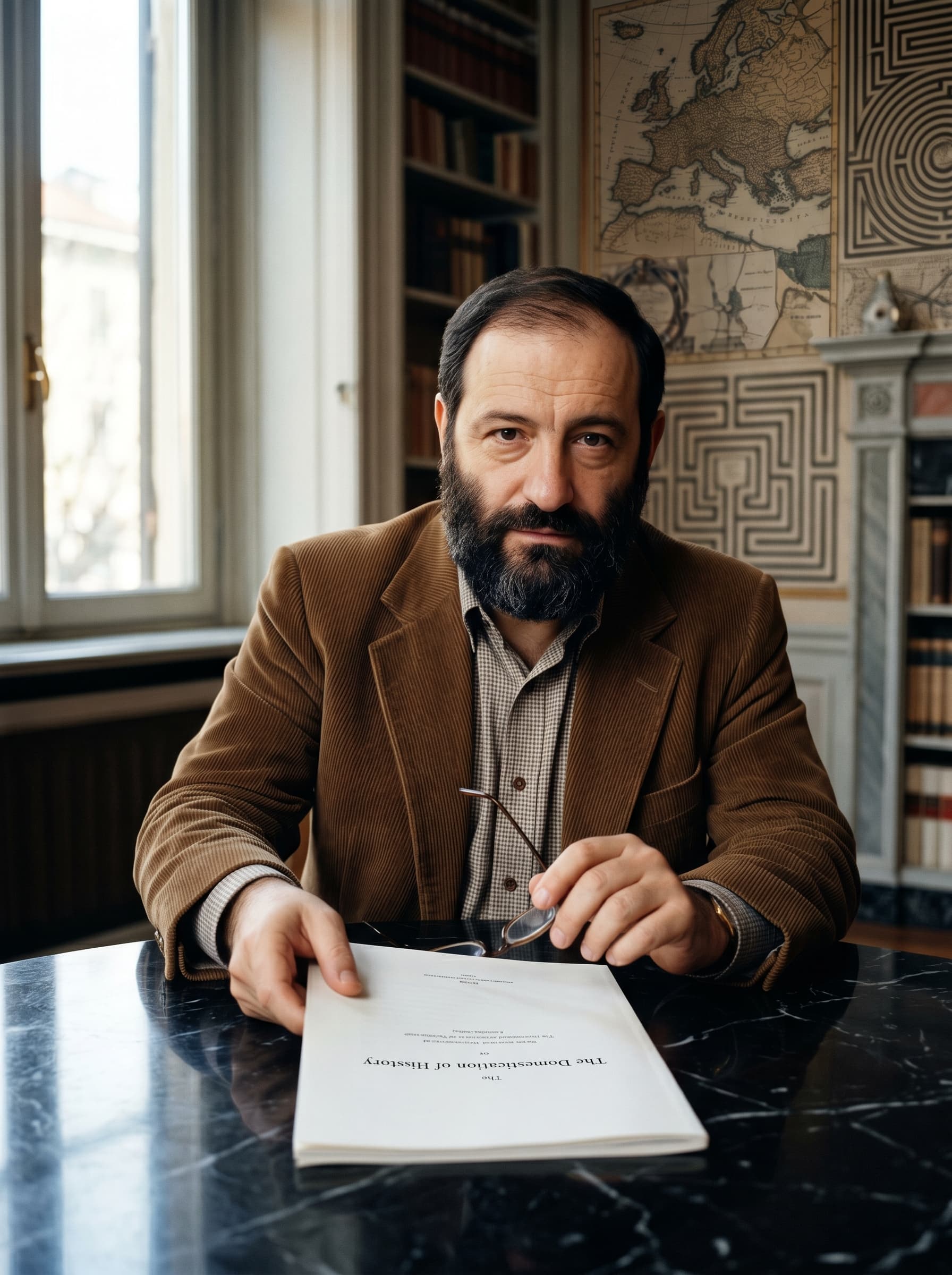
(placing essay on the black marble table, removing his glasses) “The Domestication of History.” A severe title. You lament the death of history in a carefully composed text. Tell me: do you really think I built this cage in which modern people now sit so comfortably?
No. You did not build it. The desire for it came first. Resistance weakened. Courage became rare. The cage rose gradually, almost by itself. But its door was still open. You showed people that it could be locked from the inside. You taught them that even within confinement they could still enjoy mystery, complexity, and the image of danger.
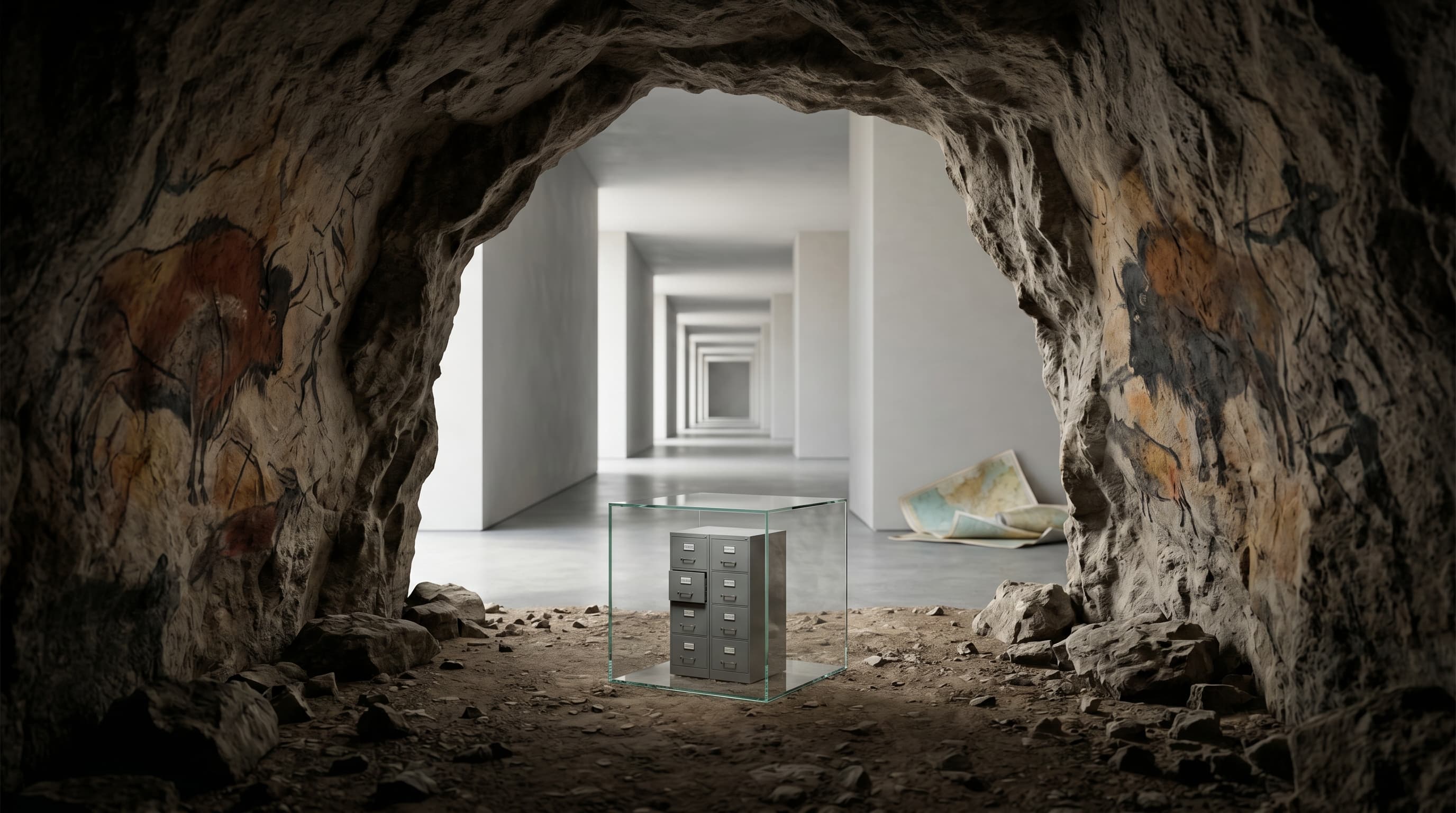
So my crime is that I made confinement more bearable? You long for an older world. For Çatalhöyük. For the age in which man still stood before death without mediation. You mourn the one who first painted the hunt on the wall. But perhaps you misunderstand him.
In what way?
He was not only brave. He was also the first to step away from immediate reality. While others hunted, he represented the hunt. He made a sign. He created distance. In that sense, he was already closer to me than to your warrior. He began the movement from danger to form.
Yes. He began it. And you completed it.
Completed what?
A world in which representation no longer refers back to anything living. Every simulation requires an original. Every map requires a territory. The painter of the hunt still remembered the hunt. His image still depended on danger. It still carried its echo.
Now the echo is fading. Courage has become so suspect, so unnecessary, that even its image is weakening. Those inside the cage no longer need labyrinths. A smooth room is enough. If the memory of danger disappears, the sign begins to empty.
Perhaps. But then your accusation reaches too far. If the territory has vanished, why blame the cartographer? I drew some of the last maps for a civilization that had already begun to forget the existence of continents.
I do not deny the value of your work. Your labyrinths are beautiful. In a sterilized age, they preserved at least a certain intellectual form. Without them, the emptiness would have been cruder.
That is generous. It is also unnecessary.
(He touches the manuscript with one finger.)
Let me point to a simpler fact. You say courage has been replaced by representation. You say the sign has become a refuge from the real. And yet, what are you doing now?
Did you leave your profession, take up a weapon, and step into physical risk? No. You wrote this essay. You chose form. You chose argument. You chose style. You oppose the death of signs by producing another sign.
That does not refute what I said.
No. But it places you inside the problem. You speak against the labyrinth in the language of the labyrinth. You have not escaped it. You have extended it.
Then what would you have me do? Fall silent?
I prescribe nothing. I only point to the structure. You think you stand outside the cage because you describe it. But description is already a room within it. You believe you have challenged my world. In fact, you have added one more chamber to it.
Then there is no way out?
I did not say that. I said only that writing is not outside. You chose text over risk. Perhaps necessarily. Perhaps wisely. But do not mistake that choice for innocence.
And you? Do you claim innocence?
No. Only proportion. I did not build the cage. I furnished part of its interior. You are doing the same.
There is still a difference between showing the wall and decorating it.
Yes. There is. But both acts still presume the wall.
(A pause.)