Evolutionary Dead End: How Fear Domesticated History
Archive
Read laterally across the essay archive.
Attached Dialogue
Dialogue with Umberto Eco: 'The Domestication of History'
Chronicle
Enter the narrative branch of the project.
The greatest lie in history did not begin when someone lost the first war and the victor rewrote the chronicles to his liking. No, the greatest lie is rooted in our biological cowardice—more precisely, in the moment we baptized this cowardice as an "evolutionary advantage" merely to survive.
Modern anthropology assures us that fear is intelligence, because the fearless were eaten by saber-toothed tigers, while those who fled survived and left offspring. Perhaps it really happened that way, but could that fleeing coward ever find the strength within to be the first to hunt a mammoth? Could the son of the runaway be the first to paint a hunting scene on a cave wall? Or, millennia later, tell his tribesmen: "You till the soil, and I will protect you from any danger"? I highly doubt it.
Yes, such people are few. The majority of the brave (or, if you prefer, the psychopaths and even the reckless) were indeed eaten by the saber-tooth. Today's domesticated human is terrified by such individuals. Our sterile comfort no longer demands bravery, so anything that requires genuine, wild risk is often dismissed as "schizophrenia" or an "anomaly." For modernity, this is perfectly logical, but was it always so?
The Unnamed City and Unsold Bravery
In one of the oldest settlements discovered on the Anatolian plateau—a place we now label with the utterly misplaced and absurd name "Çatalhöyük"—we are confronted with an awkward archaeological reality. In this nine-thousand-year-old city, there are no palaces and no temples. Does this mean our exceptional, risk-taking individuals were absent? Of course not. A settlement of that size simply could not exist without that minority of individuals who fought, thought, and dreamed on behalf of the rest.
But back then, before bravery was weaponized into institutional oppression, society was far more honest. The warrior, the poet, and the farmer did not segregate themselves. They lived in identical mud-brick houses. In that unnamed city, bravery was not an instrument of exploitation—it was an object of admiration and a natural duty. It was an era when the true elite sacrificed their own blood for the survival of the species, and they didn't demand a golden throne in return.
The Echo of Troy and the Olive Tree
History could not preserve this primal, egalitarian bravery for long. First came the Minoan civilization—a beautiful, aesthetic, but already elitist phase where the first palaces emerged and kings began to set themselves apart. Its disappearance is terribly regrettable, as it still retained a human face. Then came the era that gave us the epic of the Trojan War in the sixth century BC—a story that hasn't lost its resonance in three thousand years because it sings, for the very last time, of personal, wild honor.
When we say that admiration and personal dignity were enough for the risk-addicted men of that time, we find the perfect illustration in ancient epic. Consider Odysseus—the king of Ithaca and the classical hero. What was his home like? His bedroom was built around a living olive tree, and he carved his bed with his own hands from its deep-rooted trunk. This was an era when the elite still possessed a kind of primal, rigid dignity. Their power rested on physical labor and direct, unmediated bravery.
But then came Alexander the Great, and with him, the complete collapse of the historical paradigm. The new generation of rulers replaced beds carved from olive trees with golden thrones, and simple admiration with total exploitation. They realized a banal truth: oppressing the cautious, cowardly majority and institutionalizing their fear yields far greater benefits.
Hired Swords and the Cold-Blooded Bourgeoisie
History possesses a terrifying irony. The elite, who built their superiority on blood, made one fatal mistake: they craved comfort. They abandoned the core foundation of their power—personal risk—and outsourced the primary function of protecting (or conquering) others to mercenary armies. They thought this would preserve their status, but in reality, they surrendered the only thing that made their superiority legitimate: physical contact with death.
As soon as the old aristocracy stopped swinging swords, the bourgeoisie stepped onto the stage. They achieved what the old aristocracy could not—they survived in an extremely toxic environment, not through primal bravery, but through entirely emotionless, sadistic calculation. They replaced the swords of the old elite with bank accounts and bureaucracy, usurped the title of "the most successful humans," and rendered the instinct for domination sterile and "civilized." They created the most destructive illusion in history: the cult of absolute identity and perfect equality.
The End: The Death of History and the Intellectual Biomass
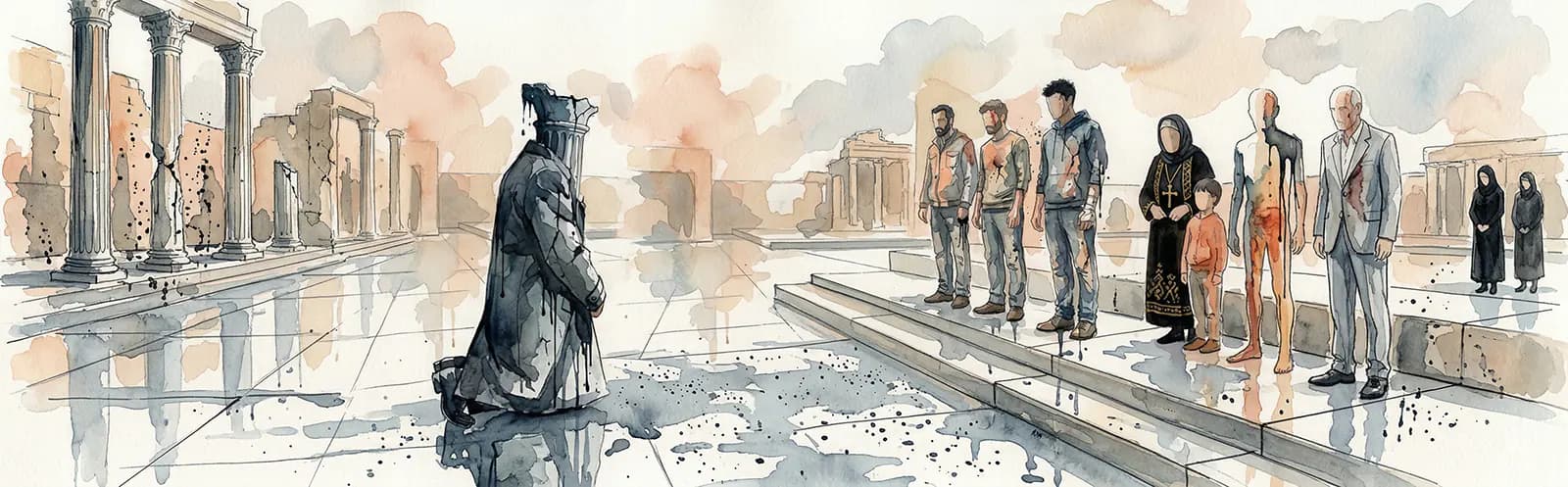
Evolution has finally erased both wild bravery and cold calculation. The system has won: it has ultimately domesticated man. When Francis Fukuyama declared the "End of History," it was not a triumph of humanity, but the sterile political manifesto of this new bourgeoisie. Real, ancient history did indeed end, and in place began a new, synthetic era—sanitized, equalized, and utterly devoid of bravery.
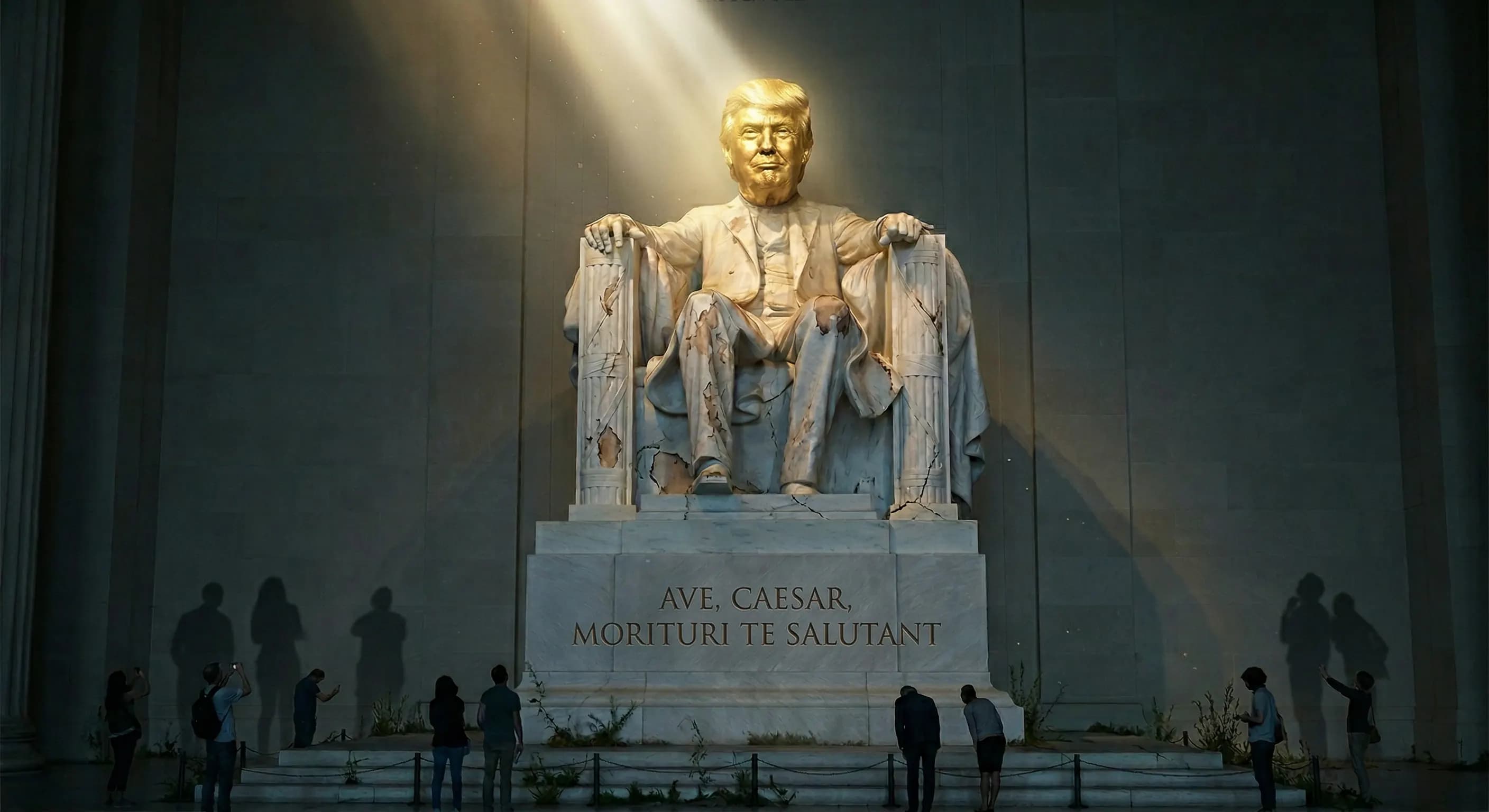
But while Fukuyama gave this new bourgeoisie political validation, the true symbol of this total degeneratism became a completely different figure—Umberto Eco. Let’s be perfectly honest: Eco is that brilliant, bastard monster who fed precisely on the nature of these cowards. He knew that the modern bourgeoisie is deathly afraid of its own emptiness and banality. So, he created the most seductive illusion in history.
Eco took the wild, dangerous labyrinths of philosophy, theology, and history and turned them into safe, plastic toys for mass consumption. He sold tens of millions of cowards the feeling that, by reading his text, they belonged to the elite, when in reality, they were just sitting in comfortable armchairs, swallowing his domesticated, neutralized thoughts in safe doses.
We have created a perfect, safe cage where the faceless mass voluntarily locks the door from the inside. And now, intoxicated by the discreet charm of this new bourgeoisie, entertained by the bloody shows of hired politicians and Eco's sterile labyrinths, we emotionlessly watch the death of the last human dignity.
Reader Continuation Protocol
One link should open the structure, not end it.
This piece is part of a larger system. Continue the same tension, branch to a related essay, or follow the feed so the next release finds you without another Reddit thread.
Continue The Same Tension
Dialogue with Umberto Eco: 'The Domestication of History'
Exclusive AABC.
Read Next
Bread for the New Empire
A look at universal basic income from within the paradigm and some attempts to look at it from outside the imperial lens.
Return Channel
Follow every new essay, dialogue, and chapter by RSS.
This is the lowest-friction way to turn one visit into a recurring relationship. Drop the feed into any reader and the archive becomes a habit instead of a lucky rediscovery.
Support Independent Thought
If this essay challenged your perspective or gave you pause, support the continued production of work that stays open, direct, and outside platform logic.