Bread for the New Empire
Archive
Read laterally across the essay archive.
Attached Dialogue
Talks about UBI
Chronicle
Enter the narrative branch of the project.
Artificial intelligence has forced an ugly question into the open: what becomes of a society when human labor is no longer broadly necessary? Workers want protection. Professions want postponement. Politicians want time. Technologists promise abundance, while others promise safety. But beneath all of this noise lies a deeper uncertainty. We still do not know what social order is being prepared for us on the other side of automation.
We speak as though humanity has never faced such a moment. That flatters our sense of novelty. In reality, the machines are new, but the logic is old. History has seen this pattern before.
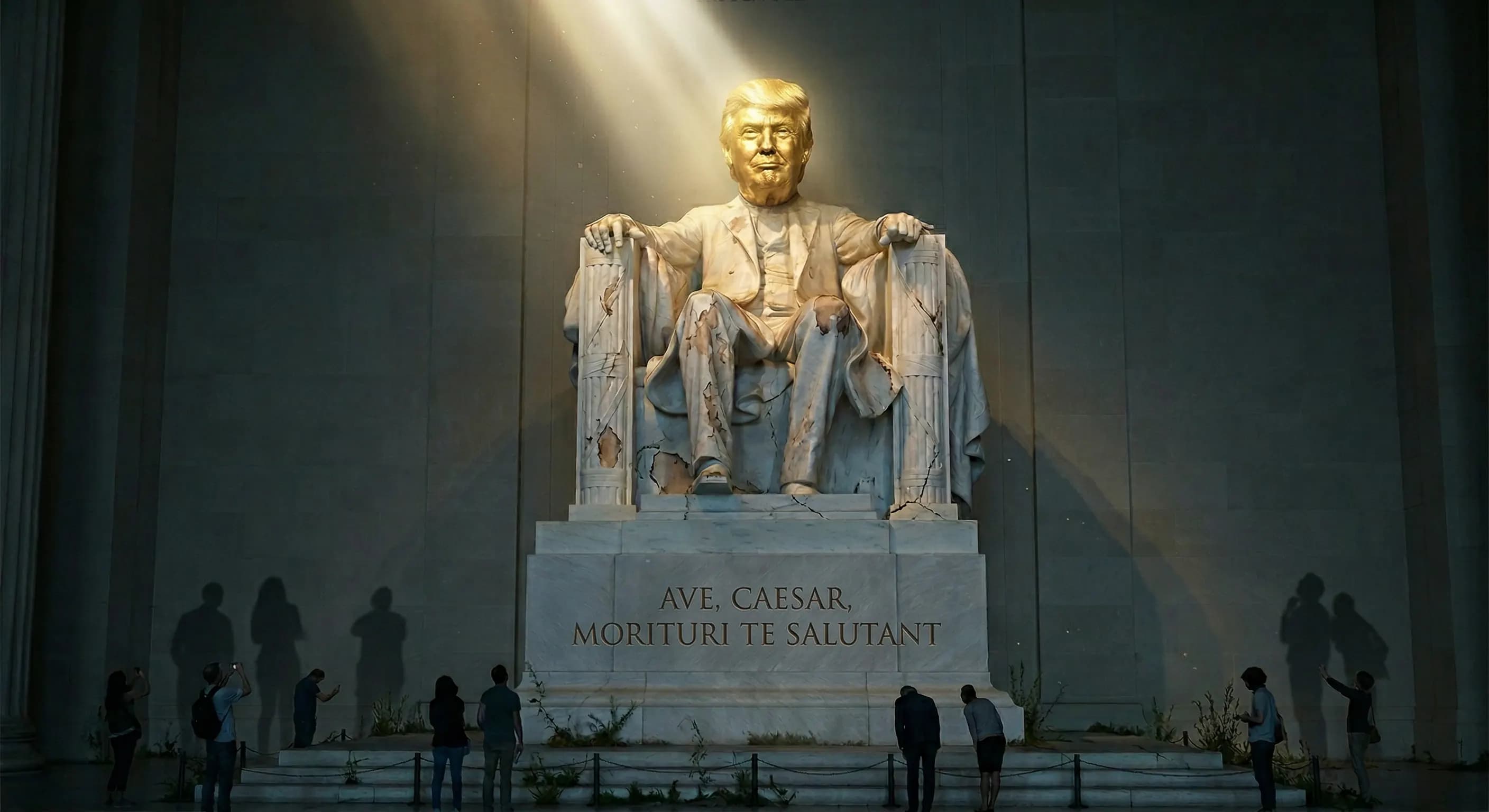
When historians discuss the death of the Roman Republic, they usually focus on the grand finale: Caesar crossing the Rubicon, civil war, Augustus consolidating the Empire. But republics rarely die in one theatrical moment. Rome was not destroyed by catastrophe. It was hollowed out by success.
After Carthage was erased, the existential threat that had disciplined the republic disappeared. Rome’s elite no longer needed the old citizen-farmer in the same way. Land was consolidated into vast estates, worked by cheap slave labor. The middle stratum that had formed the backbone of the republic could not compete. It was dispossessed, uprooted, and transformed from a class of citizens into a mass of dependents. By the time the strongmen arrived, the republic was already spiritually dead. Caesar did not kill it. He inherited its corpse.
We are now approaching a comparable threshold. The central fact of the AI transition is not simply that machines are becoming more capable. It is that an entire social order is beginning to imagine life without the broad economic necessity of most human beings. Once that happens, the question is no longer merely technological. It becomes civilizational.
Who will own the machine? Who will govern its output? And what kind of human being remains socially necessary once production no longer requires most people?
At this point, the public debate becomes strangely revealing. We are told that there are different camps within the technological elite. One camp speaks in the language of acceleration, innovation, and abundance. Another speaks in the language of caution, safety, and responsible deployment. But this opposition is largely theatrical. Their disagreement is managerial, not civilizational.
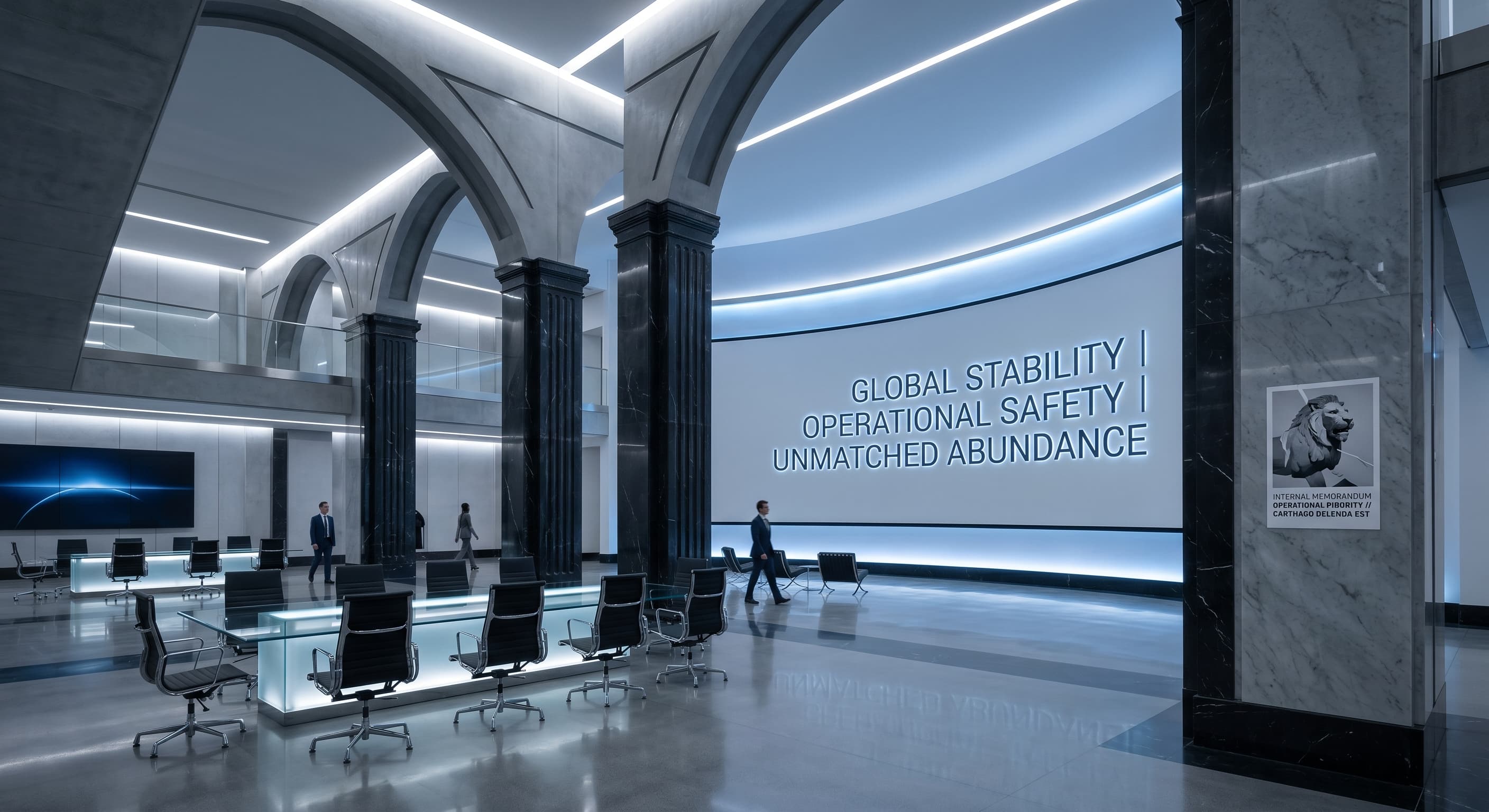
Sam Altman and Dario Amodei are often presented as representatives of different moral temperaments. One appears more optimistic, the other more restrained. One sells possibility, the other warns of danger. But both begin from the same foundational assumption: that the future will be designed, administered, and stabilized by a very small technical elite, while the majority adapts to a world it does not meaningfully shape. One offers the empire with a smile. The other offers it with a safety protocol. But both are still offering empire.
The deepest problem is not that these men are monsters. I do not believe they are. The deepest problem is that they do not question the framework itself. They do not ask whether a civilization should accept a future in which most human beings are rendered economically superfluous. They ask how such a future can be managed safely, efficiently, and humanely.
That is a profound difference.
A civilization begins to decay when its smartest people stop questioning the framework and start issuing recipes from within it. The danger begins when intelligence stops asking questions and starts prescribing destinies. Once that happens, even good intentions become secondary. A well-meaning architect of dependency is still an architect of dependency.
And this brings us to Universal Basic Income.
UBI is marketed as a humane answer to technological disruption. In reality, it is something much older: the updated ration. The modern political and technological imagination has reached for the same exhausted Roman solution—free bread for a population that is no longer needed in the same way it once was.
This is presented as compassion. It may even be sincerely intended as compassion. But structurally it means something else. It means the formal acceptance of a society in which the majority no longer participates as creators, builders, or economically necessary citizens, but remains only as recipients. Not starving recipients, perhaps. Not miserable recipients, if the system functions well. But recipients nonetheless.
A free society would ask: how do we distribute power, ownership, access, and participation in an age of abundance?
An imperial society asks something much narrower: how do we preserve stability once the many are no longer necessary?
That is why UBI, in its most fashionable form, feels less like liberation than pacification. It does not emerge from a desire to create a new type of citizen. It emerges from the need to manage a potentially dangerous surplus population without dismantling the structures that produced the problem in the first place.
And here another illusion must be broken. It is tempting to imagine that the new patricians—the men of immense wealth, platforms, data, compute, and influence—are the true sovereigns of the new order. They are not. No empire produces genuinely sovereign owners. It produces temporary beneficiaries.
Patricians are not masters in any ultimate sense. They are provisional winners inside a system whose deeper logic they do not control. Their privilege lasts only as long as they remain useful to the broader arrangement. They mistake access for sovereignty, and favorable position for freedom. Deep down, they know this. That is why their language changes so quickly when political winds shift. The supposedly untouchable become flexible, conciliatory, adaptive. That is not the behavior of true rulers. It is the behavior of highly placed beneficiaries who know their position is conditional.
This matters because it explains the psychology of the age. The modern patrician does not seek a society of equals, participants, or genuinely free citizens. He seeks a society that is governable. Not because he is uniquely evil, but because he is not truly secure. He does not want a population capable of shaping the order; he wants a population calm enough not to threaten it. Bread is not only for the masses. It is also insurance for those above them.
So the AI-era settlement now being sketched before us is not a bold new civilization. It is an old imperial reflex with updated language, better interfaces, and vastly more powerful machinery. A small class will own or direct the productive core. A managerial priesthood will debate risk, safety, scaling, and deployment. The majority will be promised security in exchange for passivity. Human dignity will be redefined downward—from creator to consumer, from citizen to client, from participant to managed recipient.
And all of this will be called progress.
Perhaps the most depressing part is that the people proposing these arrangements are often intelligent, disciplined, educated, and, in some cases, genuinely decent. But that changes nothing. The Roman problem was never merely moral. It was civilizational. Once the framework hardens, even brilliance becomes its servant.
That is why I do not find comfort in the benevolence of the engineers. A polite empire is still an empire. A safe dependency is still dependency. A well-administered passivity is still passivity.
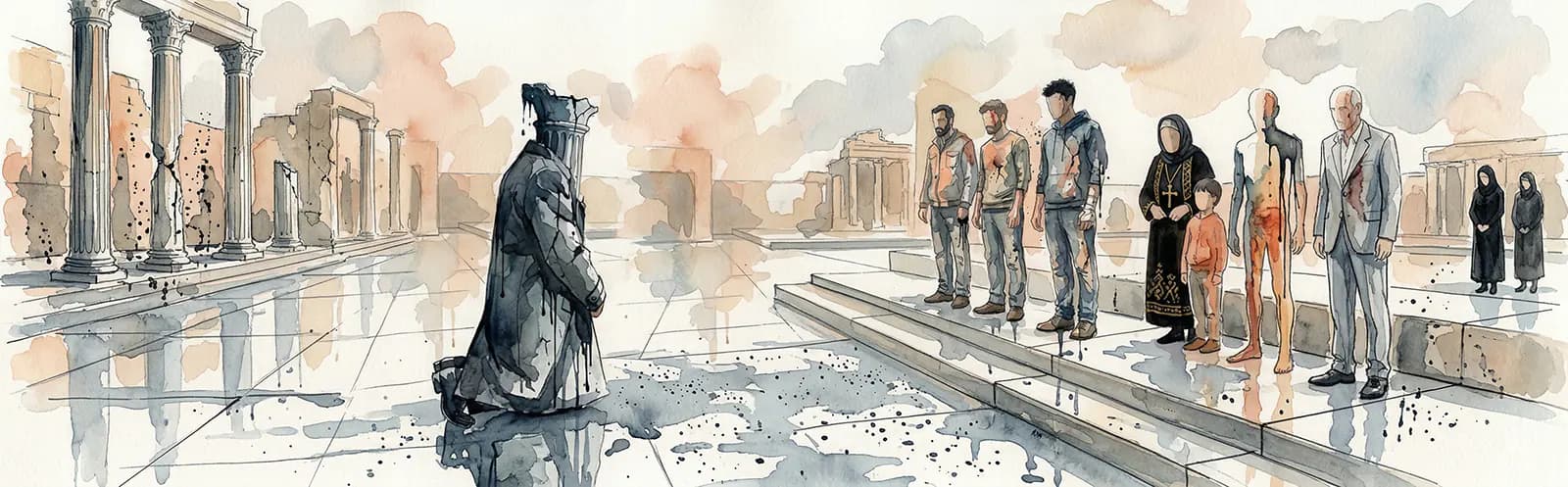
Rome did not decay because it fed the masses. Bread was never the disease. Rome decayed because the citizen gradually lost the material basis of citizenship. Land passed into fewer hands, independence withered, and the republic filled with people who could still be counted, taxed, entertained, and mobilized, but no longer stood within public life as economically rooted participants. Bread did not reverse that deformation. It merely managed its consequences.
The same temptation stands before us now. In an age of automation, the real question is not how generously the displaced should be compensated after productive power has already been concentrated. The real question is who owns the new productive core in the first place. What is the modern equivalent of land? If intelligent machines allow a tiny class of firms, funds, and founders to capture the future while the rest receive security without stake, then this is not emancipation. It is compensation paid to those who have already been cut off from ownership.
We can still choose otherwise. We can use this rupture to disperse power, broaden ownership, and create forms of participation worthy of free human beings. Or we can accept the laziest solution in history: a pacified mass, a concentrated elite, and a new empire pretending to be a humanitarian upgrade.
Nothing is too big to fall. Rome fell.
Reader Continuation Protocol
One link should open the structure, not end it.
This piece is part of a larger system. Continue the same tension, branch to a related essay, or follow the feed so the next release finds you without another Reddit thread.
Continue The Same Tension
Talks about UBI
A look at universal basic income from within the modern paradigm and some attempts to look at it from outside the imperial lens.
Read Next
Evolutionary Dead End: How Fear Domesticated History
The greatest lie in history did not begin when someone lost the first war and the victor rewrote the chronicles to his liking. No, the greatest lie is rooted in our biological cowardice—more precisely, in the moment we baptized this cowardice as an 'evolutionary advantage' merely to survive.
Return Channel
Follow every new essay, dialogue, and chapter by RSS.
This is the lowest-friction way to turn one visit into a recurring relationship. Drop the feed into any reader and the archive becomes a habit instead of a lucky rediscovery.
Support Independent Thought
If this essay challenged your perspective or gave you pause, support the continued production of work that stays open, direct, and outside platform logic.