Why Does Belgium Still Exist?
An impossible decision and endless effort.
Archive
Read laterally across the essay archive.
Dialogues
Open the parallel dialogue archive.
Chronicle
Enter the narrative branch of the project.
No one remembers the ashes of Magdeburg, or the "black veils" draped over statues in Place de la Concorde. We would probably have forgotten Joan and Napoleon too, if not for the endless visual noise of TV shows, series, and pop culture. We no longer remember who killed whom, when, or why. But the primal urge to seize someone else’s land is still there—hardwired into our genetics, our culture, and our politics. All of this happened; wars wrote history. And yet... Belgium still exists.
Why? For what? And how?
In an ideal world, the answer is obvious: the strong shouldn't crush the weak simply because they have more guns today. Even in a harsh, historical world, any Byzantine knows history is ruthless—sooner or later, a more cunning, hungrier, and better-organized enemy will come, declare your magnificent capital the center of their new empire, and absolutely no one will ask questions.
But we live in neither an ideal nor a historically logical world. The real answer is far more complex. Unfortunately, in the third decade of the 21st century, no one cares for complex answers. We prefer a 250-character limit. So today, to the question "Why doesn't France eat Belgium?" there is a much simpler, louder answer:
Because Europeans are "impotent." Because they forgot the glory of their ancestors. Because liberal elites have corrupted the old, rebellious European spirit.
This is exactly the primitive cliché parroted so eagerly by the governor of some remote Russian province, the mayor of a "small" 90-million Chinese city, or the new face of Western populism—JD Vance. In the eyes of the old world, if you can go for your neighbor's throat and choose not to, you are a laughingstock. Anyone who takes Belgium’s right to exist for granted is weak in the eyes of this world.
But in reality, those laughing at this so-called European weakness are terrified.
Let’s ask a blunt question: Does the existence of Belgium prevent the bombing of Tehran? Is the forceful conquest of Taiwan directly tied to how the world perceives Europe? The answer is—yes, absolutely.
The power of dictators, war parties, and populist buffoons rests on a single primitive myth: the world is a jungle. For autocrats to justify their total control, or for American "hawks" to sell trillion-dollar defense budgets, the average American or Chinese citizen must believe that wolves are prowling outside. They must believe the only way to survive is to destroy others. And suddenly, into this bloody equation enters Belgium—a geographical and political anomaly that flips the law of the jungle on its head.
Imagine what happens when an ordinary citizen sees through the propaganda and realizes that tiny Belgium exists perfectly well between France and Germany, and no one intends to swallow it. What if they realize that achieving prosperity doesn't require drowning your neighbor in blood? That’s when an existential, devastating question arises: Is rattling sabers to conquer Taiwan or destroy Ukraine really necessary? Does another way exist?
This is the "Belgium virus," and power-hungry autocrats are deathly afraid of it. It is highly contagious. Because if we admit that rejecting violence is strength, not weakness, then all these strongman buffoons are exposed for what they truly are—just clowns destined for the garbage dump of history.
Let’s assume for a minute their critique is entirely true. Yes, Europe is "impotent." Yes, it’s a massive, boring bureaucratic swamp. Traditional values have lost their grip, and most Europeans can’t even be bothered to think about restoring past glory; in fact, they actively run from any attempt to bring it back.
All of this might be true. But to hell with glory. Let’s ask a much more selfish question: Does an average Frenchman, Dane, or German live better today, or back when their countries were "great," fierce, and ruthless?
Let’s talk not about the ultra-rich or the homeless, but the middle 80 percent whose shoulders actually hold up any state. Who on this planet is more secure, provided for, and at peace than the average European? An average Russian used as cannon fodder by his "invincible" empire? An average Chinese citizen suffocated by cameras and social credit scores? Or an average American whose entire life can be ruined by a medical bill or a college loan?
It turns out that living in an "impotent," bureaucratic swamp is far safer, healthier, and happier than living in an empire. But don’t mistake this bureaucratic swamp for an ideal state or the end of history. No. The swamp isn't the cause of peace. It is the necessary, transitional phase of existential shock, of detoxing from the drug of bloody glory. The process of renouncing fabricated values.
We struggle to admit this reevaluation because traditional history is written by butchers. Who is greater—Alexander the Great or Willy Brandt? Sitting on a horse and burning down someone else's cities is easy. So-called "strongmen" are deathly afraid of collective responsibility. Look at today’s exiled Russians screaming that collective responsibility doesn’t exist. Look at the Turkish political landscape—anyone who wants to enter it knows the Armenian genocide lies at the foundation of their state, yet acknowledging it as a crime is itself a crime. They are all afraid.
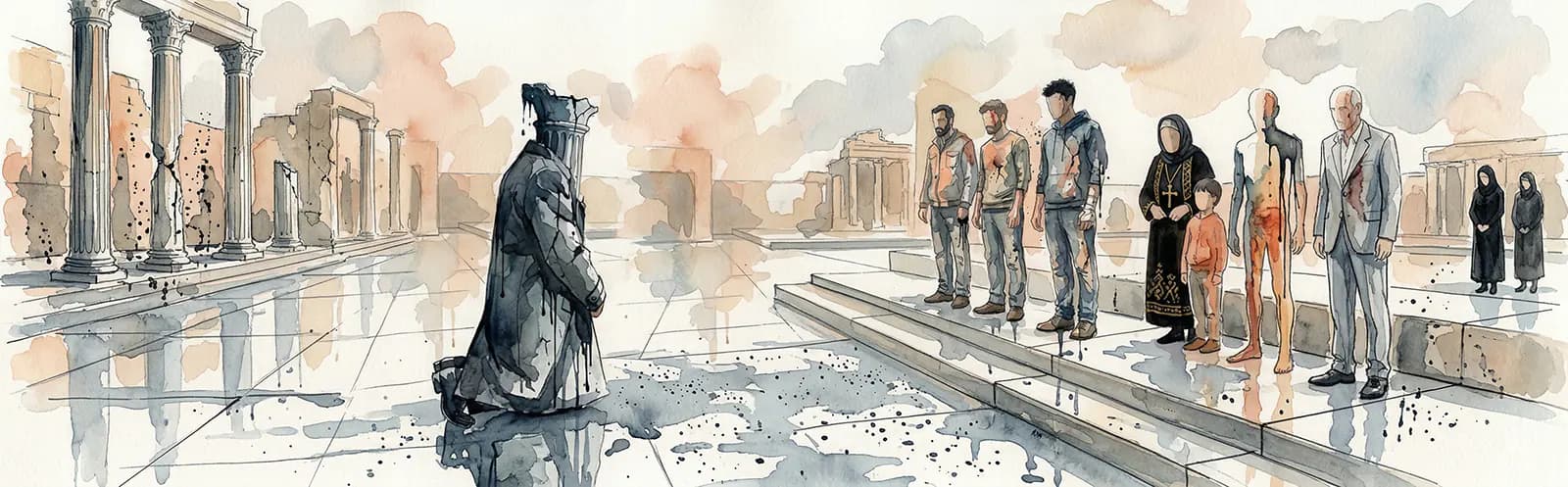
And against this backdrop, in 1970, Willy Brandt drops to his knees in Warsaw. A man who personally never supported the fascists. I don’t remember exactly what the photo of him kneeling looks like, but when I think about it, I see a true titan—a man with broad shoulders who took the collective burden upon himself, beyond any personal responsibility. He took on the sins of countless friends, relatives, fellow citizens, or complete strangers, acknowledged them, and with that single kneeling, liberated an entire nation. Now that is the power dictators fear.
But let’s not fool ourselves. How many Europeans today know Willy Brandt’s name? 3 percent? 5? How many remember Václav Havel? Our reality is far more banal and hypocritical. We still pray to Alexander and Genghis Khan. We live in a world where, for most Greeks, Alexander is an exclusively permitted idol in a society that supposedly condemns idolatry. They need a sterile, idealized conqueror—an ordinary killer and, ironically, the very destroyer of classical Greek identity and freedom. And because this idol is so fake, any mention not of some identity, but simply of his homosexual experiences or youthful experimentation, is taken as a personal insult today.
We live in a world where Spaniards believe the fate of Catalonia can be decided anywhere but Catalonia itself; where the recognition of Kosovo depends entirely on whose pocket holds which separatist landmine.
We are still hypocrites. Almost no one remembers Havel and Brandt. But you know what? It doesn’t matter. Belgium survived because the standard, gray, boring Euro-bureaucracy turned the consensus of peace into a daily routine. They replaced the "drama" of fighting for territory with the "dryness" of arguing over regulations. When you want to bully your neighbor, but instead you have to spend a decade arguing over milk quotas and emissions, you can no longer be Alexander.
And yet, ultimately, why does Belgium exist?
Because, it turns out, it is possible to admit mistakes. It is possible to take responsibility for their consequences, apologize, and work tirelessly so the nightmare never repeats. The other path is well known—hiding mistakes, making words taboo, removing them from discussion, and ultimately repeating the old atrocities in different forms.
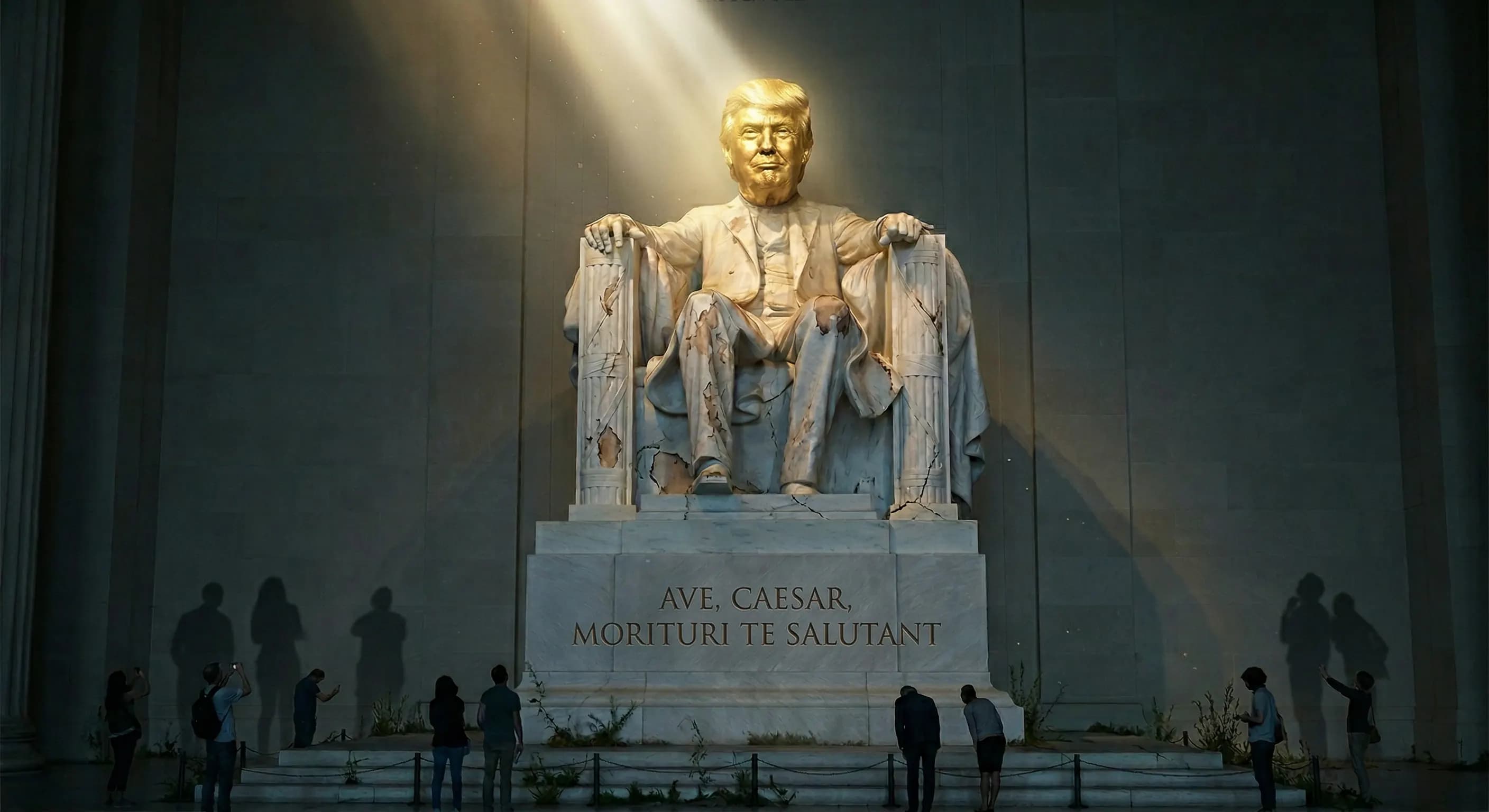
Belgium exists because it turns out you can have statues of Charlemagne and Napoleon in your squares while building a tolerant, peaceful country. And on the flip side—you can smash statues and other visual manifestations of historical trauma, yet simultaneously build an intensely intolerant, aggressive society.
It exists because you can renounce millennia of expansionism and ensure the welfare of your people without robbing others. Or you can choose the other path: deploy supposedly "isolationist" rhetoric while kidnapping a foreign president simply because you need control of his oil—exactly as America did with Maduro at the end of 2025 with absolute, naked cynicism.
Simply put, Belgium exists because when the time came for an existential choice, many people stood together and said: we no longer want to live by the old rules, the old ambitions, and the old bloody approaches.
We will create a space where Belgium simply exists. And it will exist in such a way that no one, ever again, will ask why.
Reader Continuation Protocol
One link should open the structure, not end it.
This piece is part of a larger system. Continue the same tension, branch to a related essay, or follow the feed so the next release finds you without another Reddit thread.
Continue The Same Tension
Open the dialogue archive
Every editorial lives beside a second field of thought. Move into the dialogues to see the argument answer back.
Read Next
Bread for the New Empire
A look at universal basic income from within the paradigm and some attempts to look at it from outside the imperial lens.
Return Channel
Follow every new essay, dialogue, and chapter by RSS.
This is the lowest-friction way to turn one visit into a recurring relationship. Drop the feed into any reader and the archive becomes a habit instead of a lucky rediscovery.
Support Independent Thought
If this essay challenged your perspective or gave you pause, support the continued production of work that stays open, direct, and outside platform logic.