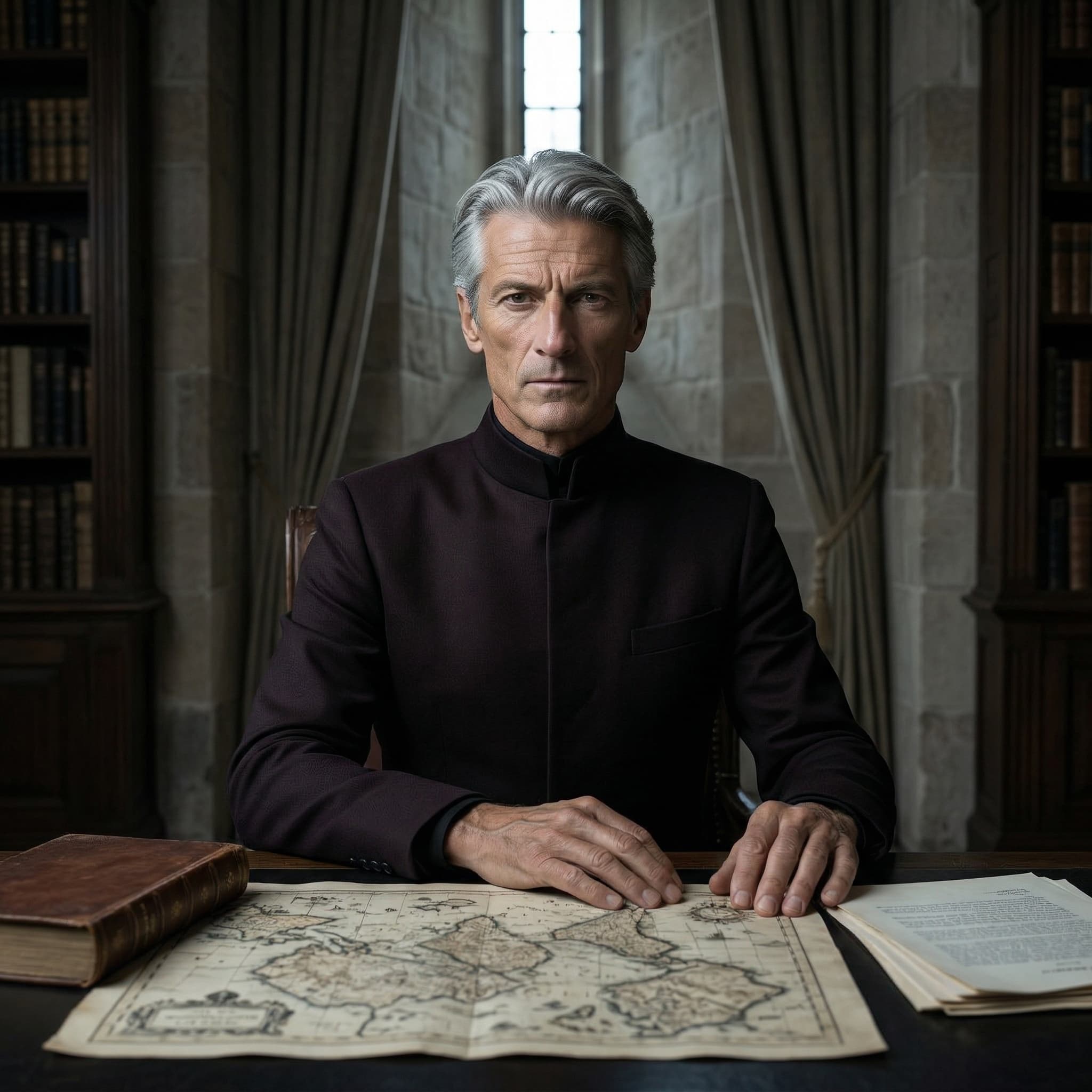
Good evening, Your Eminence.
Good evening.
It is interesting that from the very beginning of the novel, the author places you almost on the dark side — a kind of Darth Vader, only without the noble Jedi past.
In one respect, I can agree. I did not have a noble past. I was neither a celebrated soldier, nor a prefect of security, nor the heir to some great lineage. But I have always been in the service of the state. And, more importantly, I have served it effectively.
So you disagree with the author that you are the principal evil of this story?
The word evil is useful at a childish age. In the adult world, it explains very little. I do not claim goodness, nor do I require participation in its theater. A state of this scale cannot be governed by a kind man. Those who try either collapse themselves, or bring the country down with them.
As far as I know, nominally at least, you do not govern the Republic.
Precisely nominally. The head of the Academy is an exhausted old man, worn thin by private troubles. The First Consul, meanwhile, is excessively noble. Such men deserve respect, but they cannot command strong men. And states, regrettably, are not governed by respect.
So you mean to say that you simply govern better than others?
Mean is the wrong word. This is not a matter of desire. Some men understand music better than others, some understand numbers, some understand force. I understand the distribution of force better than most. And when you see that you can prevent chaos, stepping aside ceases to be modesty and becomes laziness.
Modesty is certainly not the word most associated with you.
Society often mistakes humility for virtue. More often than not, it is merely a mask. I have never had much affection for masks.
You do not belong to the hereditary aristocracy, and yet many say that all your life you have tried to appear aristocratic.
Many people say many things. Aristocracy, in my observation, is divided into two kinds. The first live by their name. The second construct within themselves such order that a name becomes unnecessary. I have always found the second path more interesting.
And yet — the clothes, the manners, the language, the bearing — all of it feels very carefully calculated.
Of course it is calculated. Disorder only appeals to romantics. Most people require form in order to recognize strength. And they are right to do so. Naked force is vulgar. Force given form is already politics.
And money? Do you regard it with the same serenity?
Money is the dullest form of power. But it is necessary. A poor moralist may be charming in a salon. In a state, he is merely helpless.
It is said that you are one of the wealthiest men in the Republic. Unlike the old senators, you did not inherit that wealth.
Is that meant to sound like an accusation?
Perhaps a disguised compliment.
Then let us say this: inherited wealth always smells faintly of laziness. Wealth acquired by one’s own hand smells of risk. I prefer the second scent.
Risk, it seems, includes blood in your case. Let me ask you directly. Was it you who gave the order to destroy Poco’s plane?
Yes.
And to this day, you still consider it the correct decision?
Consider is another unnecessary word. Necessity does not require the theater of remorse. Everything was calculated. Every alternative was examined. And what we saw was far worse than the deaths of those decent and truly exceptional people. So when the moment for decision came, I made it without hesitation. That is what responsibility is.
You call them “exceptional people” and yet you kill them.
There is no contradiction in that. The dignity of the victim makes a decision heavier. It does not nullify it.
It is interesting — your tone resembles that of a surgeon more than that of a servant of the state.
That is precisely why a good surgeon is good. His hand does not tremble, even when the body before him is still alive. A weak surgeon is a tragedy for the patient. A weak statesman is a tragedy for the people.
So you think of yourself as a surgeon?
No. A surgeon decides the fate of one body. I work with far coarser material.
Human beings?
States. Human beings are merely one of their components.
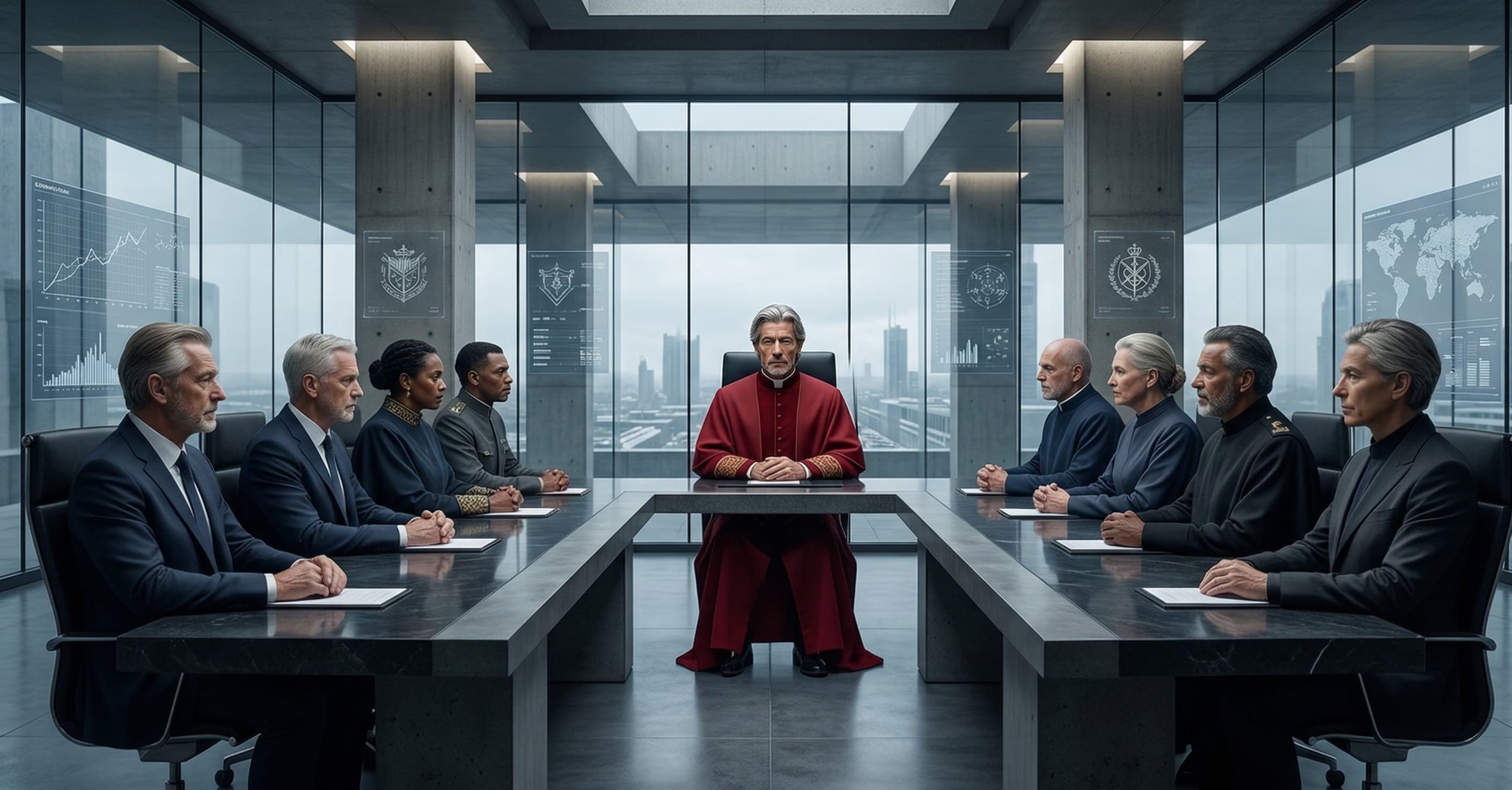
Every regime, sooner or later, does the same thing: it baptizes its elitism as principle, its ambition as responsibility, its aggression as security, its corruption as exception. In what way is the Seventh Republic different? Only in that you do it better?
Perhaps. Or only in that we lie less. The state is elitist because not everyone can govern it. It is ambitious because an unambitious state becomes an appendage of another. It wages war because the safety and prosperity of its citizens are sometimes determined not at one’s own border, but at someone else’s.
In the name of that “prosperity,” countless innocent people die.
And what did you imagine history is written with? The death of an innocent person is a tragedy. But tragedy is not an argument. States rarely choose between good and evil. More often, the choice is between limited damage and greater catastrophe.
And corruption? Will you tell me that too is necessity?
No. There I cannot astonish you. It is a personal and rather banal weakness of mine. If one day the people decide that I should answer for that in particular, I am prepared to do so. But the truth is that society forgives great blood much more readily than minor financial impurity — especially when that blood protects its peace.
It is remarkable how freely you speak of your own filth.
No. I simply know how to distinguish scale. It would be absurd for a man entrusted with the safety of thousands of families to perform grand remorse over lesser sins.
So you believe a great crime makes a smaller crime fade into irrelevance?
I believe there is a moral hierarchy in the adult world. Children find everything equally horrifying. Grown men weigh.
You often speak of adulthood, weight, necessity. But perhaps all this is simply a polished language with which men addicted to power decorate their cruelty.
Naturally. That is precisely what language is for — to give form to what would otherwise be intolerable. But that does not mean there is emptiness beneath the form. Sometimes beneath it lies the heavy truth that people are incapable of enduring in a raw state.
In your view, then, people are too weak for the truth?
“The people” is not a category that interests me very much. The people always awaken late, and often incorrectly. Politics is not built according to what the masses are capable of understanding. It is built according to what the state is capable of carrying.
So in the end, the citizen is merely a means to you?
In the end, to everyone. The only difference is who dares admit it aloud, and who prefers to drape it in humane phrases.
You speak very convincingly about necessity. But one question remains — one that neither the state nor your theory of responsibility can erase.
I’m listening.
You gave the order for Ace’s mother to be killed. After that, you pressured his father, and the boy — who was only fifteen at the time — was effectively taken into your custody. Was this truly in the interest of the state, or did you simply decide that the final word over his life belonged to you?
You are mixing two different things in that question. One was necessity. The other was opportunity.
Opportunity for whom? For Ace?
For both of us.
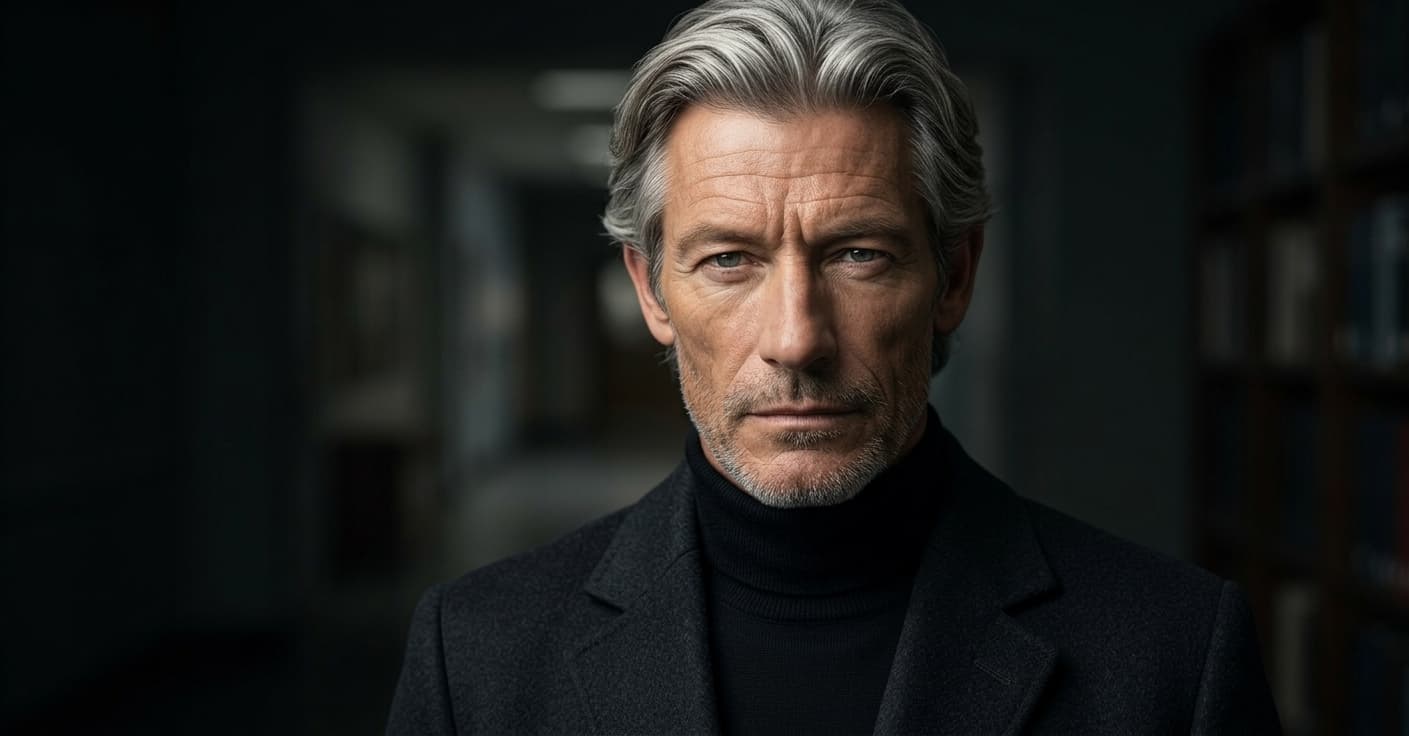
You removed the mother, broke the father, and then drew a fifteen-year-old boy into your own sphere of influence. Was that upbringing — or appropriation?
Neither. Formation.
And who gave you that right?
The fact that I knew better than others what he might become.
Were you raising him as a son — or as an heir?
That distinction matters to weak men. A strong man cultivates whatever the future will require.
And if Ace did not want that?
At fifteen, a human being almost never wants what is necessary for him.
So you believed you knew him better than he knew himself?
No. No one knows better than a man himself what he wants. The problem is that he very rarely knows what he is capable of.
What were you hoping for?
I hoped for nothing. I made a decision.